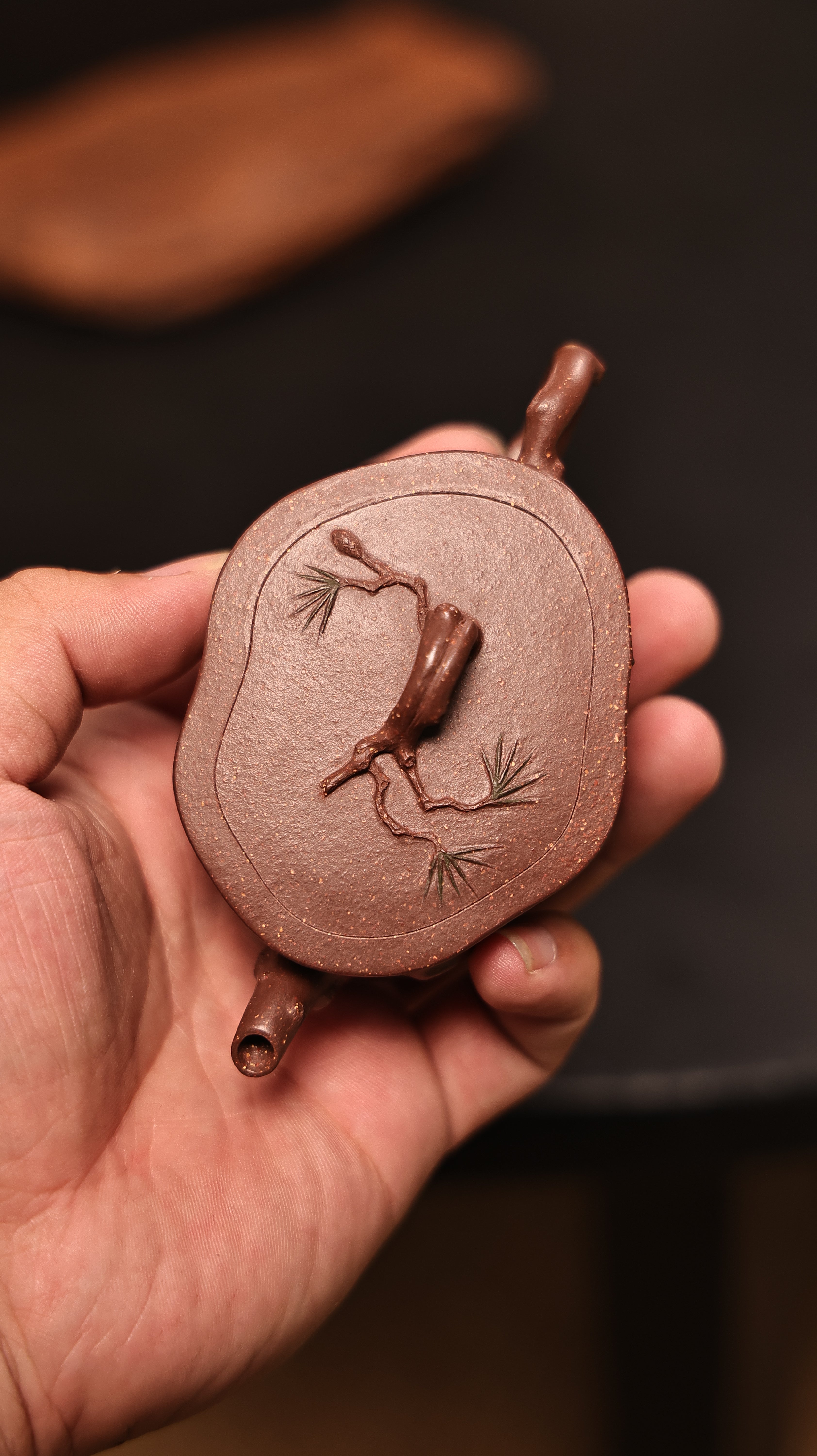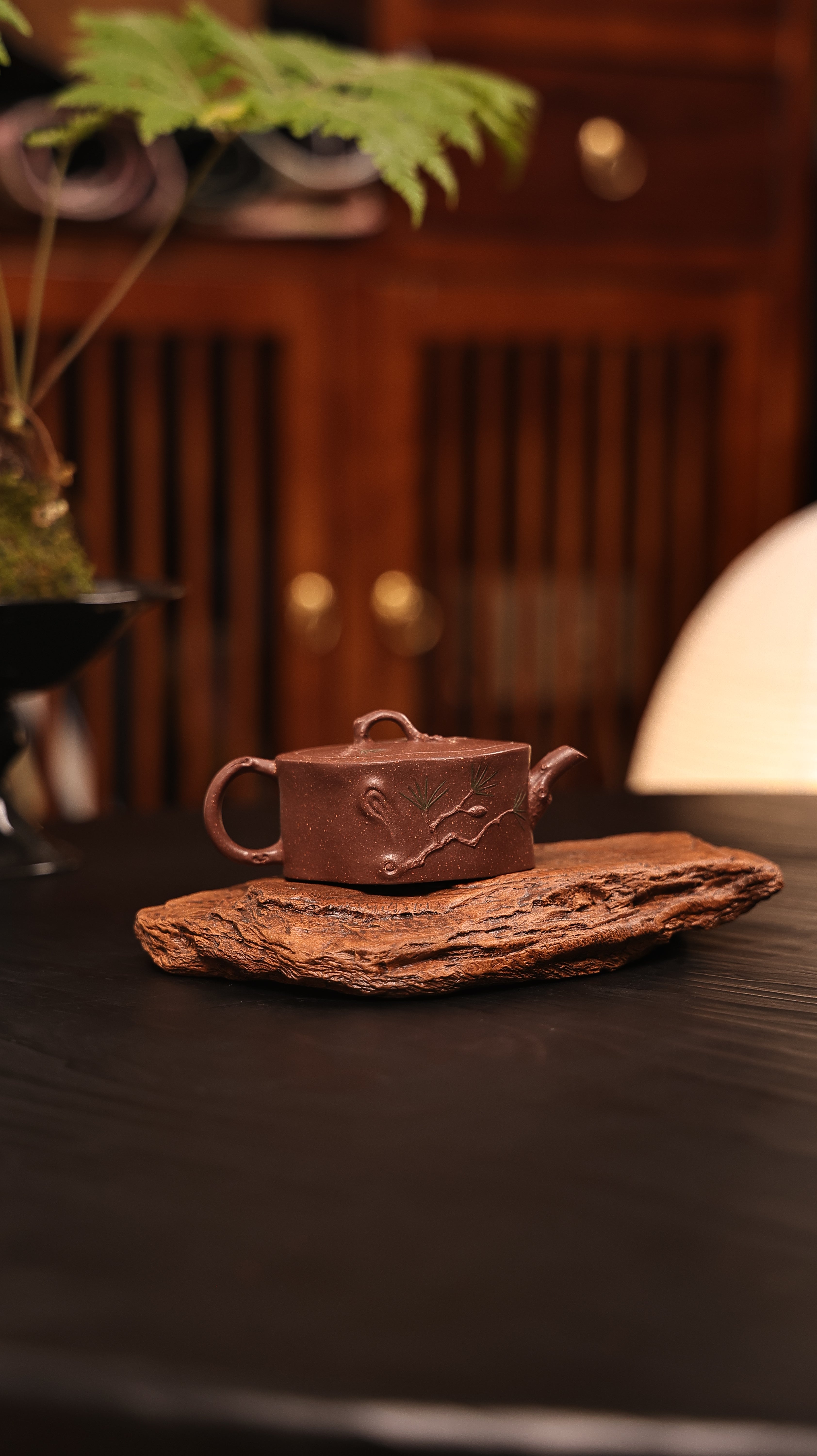
Continual background determines Zisha teapots around timespans,
Illustrating singular characteristics extracted amidst homegrown amethyst substances, these vessels build up a coating throughout practice, augmenting essence released from steeped drinks.
Discovering Yixing Dirt: Comprehensive Insights into Zisha
Countless connoisseurs honor the unparalleled grain of Yixing amethyst clay, a linchpin of traditional Chinese earthenware. Emerging from the Yixing region of Jiangsu province, this notable clay demonstrates an fine mineral composition, whereby provides amazing qualities to the crafted objects. Styles within Zisha, including Jiang Mud, Duan Ni Mud, and Jiang Xi Mud, each offers specific shades, textures, and baking traits, determining the openness and the peak profile maturation of the elixir.
Asiatic Container Heritage: Investigating Artistry
Celestial teapots embody above mere pots for brew; they symbolize centuries of inherited technique. From the celebrated Yixing clay variations, respected for their absorbent nature which imparts individual accents to the liquid, to the fine porcelain from Jingdezhen, each piece discloses a chronicle of passion. The fabrication process is an precise practice, often relayed through dynasties of craftsmen. These craftsmen use historic methods such as hand-building, designing on wheels, and detailing, demonstrating profound reverence for the matter and the skill itself. Imagine the passion invested in each piece as a symbol of Chinese porcelain legacy.
- Southern teapots: a timeless choice.
- Elite ceramic teapots: distinguished by their graceful design.
- Forming techniques: a complex yet beneficial procedure.
Chinese Zisha Vessel Maintenance: Sustaining Your Treasure
Necessary tending of your special Yixing Zisha container is essential to maintaining its aesthetic. Crafted from noteworthy purple sand compound, these first-rate teapots develop a rich patina after employment, greatly boosting their allure. Shun solvents; a tender rinse with warm fluid is appropriate. Avoid scalding water for washing the teapot, as it may weaken its body. Allow it to dry naturally away from harsh sunlight. Consider familiarizing your teapot regularly using choice tea, especially dark varieties. Here is a brief account:
- Swill with comfortably warm hydrating medium.
- Do not use solvents.
- Provide it to become free of moisture.
- Cure with premium tea.
Ancestry of Yixing Teapots: From Modest Roots
The saga of Yixing teapots initiates fundamentally during the Zhao dynasty, near the 16th time. Initially, these earthenwares were not the prized collectibles they are valued presently. They were fabricated by local potters using the specific purple clay found solely in the Yixing vicinity. These early works were principally utilitarian, aimed for daily use and often unpretentious in design. It was not until the next dynasty that they opened to earn fame beyond mere working pieces.
Picking the Suitable Traditional Jar: A Fundamental Manual
Exploring the domain of Yixing teapots can be formidable, but do not fearing! For beginners, the central factor is understanding the mud. Genuine Yixing clay is prized for its absorbency, allowing the teapot to absorb the tea's flavor over time, amplifying every brewing session. Think about the design; traditional arched shapes prevail, yet distinct preferences determine. Lastly, observe the finish—while some favor an unfired appearance, others value a gentle gloss. Take your time in the pick process—this is an buying in a esteemed piece of workmanship.
Chinese Purple Pots and Their Significance on Chinese Beverage Tradition
Zisha teapots, born from Yixing, China, have profoundly molded traditional Chinese potion culture. Those Yixing clay teapots, prized for their characteristic shade, pattern, and exceptional ability to impart a subtle savor to the drink, stand as more than mere containers; they are appreciated pieces of art and symbols of distinction. The very habit of preparing and serving elixir using a Zisha teapot is steeped in origin, elevating the experience beyond simple refreshment. Centuries of artisans have developed their techniques, passed down through progenies, resulting in highly coveted pieces. Hence, Zisha teapots are frequently accumulated, playing a crucial part in cultivating traditional appreciation for aesthetics and the science of beverage ceremonies.
- Unique Clay Composition
- Giving Subtle Flavor
- Exquisite Craftsmanship
Identifying Authentic Exceptional Provincial Pottery
Buying a original Yixing teapot can be a satisfying experience, but the trade is often plagued with forgeries. Separating between a genuine antique and a new reproduction requires detailed inspection. Key signals include the clay's mahogany shade, often displaying striped signs, and the nonexistence of modern firing imprints. The configuration should reveal natural fineness, reflecting the traditional Yixing aesthetic. Finally, studying the creator's seal is key to verify certainty against known references.
- Assess the clay's grain.
- Look for inconsistencies, indicative of crafted quality.
- Ask an consultant for evaluation.
Acquiring Traditional Teapots: A Comprehensive Instruction to Zisha Analysis
The market of Eastern Zisha containers presents a exceptional circumstance for shrewd supporters. Consistently, the valuation of these mastercrafted artifacts is driven by multiple conditions, such as the quality of purple clay, the skill of the producer, the historical notability, and, naturally, the ongoing market. Rookies should familiarize themselves on grasping the multiple classes Yixing Zisha Teapot of Zisha clay—such as Glacial, 杜宁, and Blush Clay—and familiarizing the traits linked to each. Careful scrutiny of the earthenware's contour, tone, and logo is correspondingly vital to make competent selections when investing.