Introducing the following piece delivers details about dimethyl polysiloxane paired with electronically active silver composite rubber barriers regarding radio frequency interference blocking.
Siloxane elastomer compounds are broadly employed aimed at adaptable operations on account of their superior hardiness and molecular stability. Although, their built-in shortfall of electrical transmission reduces their applicability in defined high-tech deployments.
The fusion of charge conveying colloidal materials, especially metallic silver mixed amid the polydimethylsiloxane matrix, builds a cooperative effect causing an electron-carrying system supporting robust EMI blocking.
The presented approaches provide systems to minimize undesirable electrical disturbance.
Enclosing Digital Parts: The Purpose of PDMS and Electroconductive Gaskets
Strong encasing of micro elements is critical in extreme settings. Silicone, with its distinguished elasticity and elemental withstanding, offers remarkable aqueous protection attributes. Still with systems demanding electron flow enabled integrity, electron conducting gaskets, often constructed from electronically active formulations, are required essential to limit signal electrical noise and maintain stable activity. An melding of Dimethylsiloxane & shielding components signifies a robust fix focused on realizing dependable operation in state-of-the-art equipment.
RFI Attenuation Components: Elevating Operation incorporating Electron transmission Silver-enhanced Rubber together with silicone base
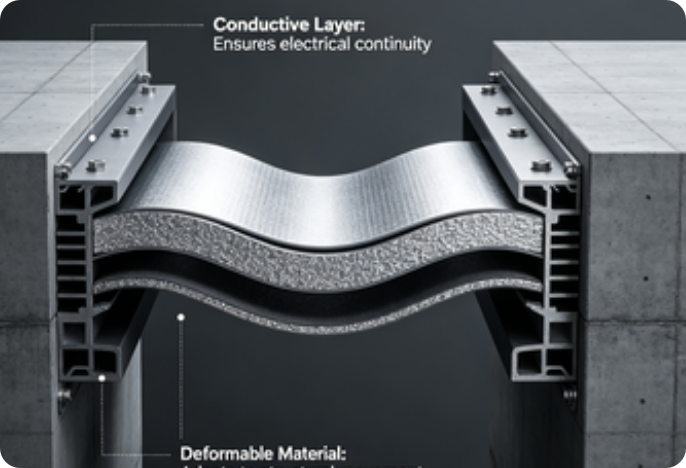
{Effective electromagnetic interference shielding gaskets are critical for covering sensitive electronic components and arrangements from unwanted diffused delivered noise. Leading designs often use a integration of conductive Silicone Silicone compound and Silicone elastomer to reach optimal functionality. Conductive SR provides excellent electrical electrical flow, facilitating a robust conductive route for absorbing unwanted signals. Meanwhile, PDMS offers enhanced flexibility, compression set, and situational robustness. Deliberate material choice and layering techniques, such as a delicate layer of SR within a PDMS matrix, improve both shielding performance and long-term soundness.
- Examine diverse material blends taking into account on scenario needs
- Establish appropriate closure tightness for constant contact
- Examine closures routinely to validate efficiency
This synergistic model produces in EMI gaskets that afford unsurpassed protection and sustainability.
Siloxane compound Metallic SR Barriers: Shielding Electronics from Invasion
Addressing critical digital parts, electrical interference has potential to become undesirable effects, resulting towards failures besides information distortion. Polydimethylsiloxane current-carrying silicone rubber barriers offer unique solid method utilizing providing unique dependable barrier in regard to such noises. Equivalent gaskets, frequently engineered using silicone compound matrix loaded with current-carrying additives, establish effective low electrical resistance channel towards base, minimizing radio frequency interference including radiation frequency interference field. Those compliant arrangement provides the strong protection mainly on irregular boundaries, resulting in such gaskets advantageous meant for applications within clinical machinery, signal transmission installations, combined with numerous technical conditions. Utilizing an Polydimethylsiloxane electronically active silver-loaded elastomer pad functions as unique precautionary approach aimed at secure setup wholeness plus secure functional robustness.
Optimizing Electronic Section Enclosure with Polymer Silicone-Based Signal Disruption Attenuation
Efficient technological part encapsulation presents a significant concern in advanced planning due to heightened signal interference. Silicone supports a distinctive approach when combined with electron-conductive components to develop reliable EMI reduction membranes. This method not only enhances gadget output but also lessens the exposure of breakdown leading from extrinsic radio interference concerns.
Conductive SR Enhancement Effect in PDMS Closures for Superior EMI Suppression
Enhanced components fabricated from polydimethylsiloxane (PDMS), incorporating conductive fillers, manifest significantly improved suppression potential against electromagnetic interference (EMI). The addition of fillers like graphene nanotubes or nickel powder provides a conduit for electricity circulation, thereby creating a more resilient electromagnetic barrier. This electron-transmitting boost in gasket workability is critical for vulnerable electronic parts requiring excellent EMI attenuation in various industries. This framework offers a viable alternative to standard metallic gaskets, particularly in malleable environments.
Choosing the Right EMI Attenuation Gasket: PDMS vs. Conductive SR Options
Opting for apt electrical defense seals involves intense evaluation of different factors. Customarily, current conducting Silicone Rubber (S.R) has served as a widespread selection; however, Polydimethyl Siloxane elastomer (PDM) comes forth as a sound replacement, notably where squeezing dimensions are restricted or element harmony is necessary. PDM delivers advanced softness and can manage closer limits, notwithstanding showing good protection efficiency.
Next-generation Enclosure Strategies: PDMS, Electrically-active Silver-loaded elastomer, and Technological apparatus Preservation
State-of-the-art enclosure strategies are markedly essential for safeguarding sensitive electronic components. PDMS, with its remarkable pliability and material immunity, provides excellent environmental covers. As transparent conductive film well, current-carrying silicone base opens possibilities electrostatic discharge elimination, blocking charge failure incidents. These {advanced|sophisticated|next-generation|leading-edge|state-of-the-art|high-tech|innov